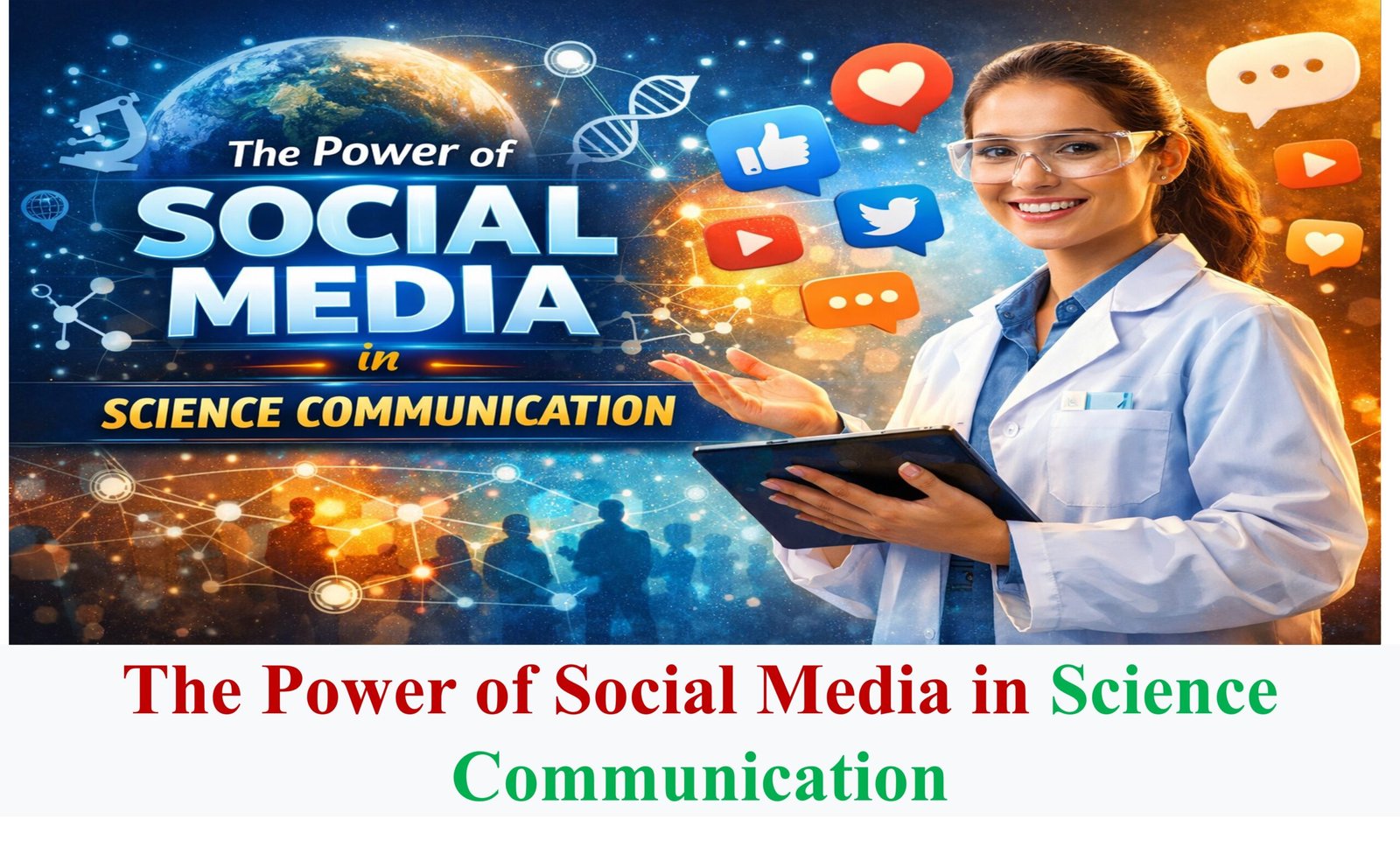
The Power of Social Media in Science Communication
For me, social media has always been one of the most effective ways to reach a global audience, share knowledge, and connect with both scientists and non-scientists. It offers individuals the freedom to decide what to share, when to post, how often to engage, and with whom to interact.
In recent years, shifts in the social media landscape have disrupted the scientific community, leading some researchers to step away entirely. Yet, despite these changes, social media remains one of the most powerful platforms for communicating science and creating meaningful impact.
Why Scientists Should Use Social Media
In today’s digital era, social media platforms provide unparalleled opportunities for scientists to amplify their voices and build a public presence. The reach and flexibility of these platforms allow researchers to communicate directly with diverse audiences.
Although algorithm changes and platform politics have influenced user behavior, scientists continue to actively share their work online. Many remain committed to raising awareness about research and scientific issues. For instance, a recent Nature survey revealed that nearly 75% of respondents use platforms like Bluesky for science communication.
With increasing global connectivity, social media enables scientists to engage with audiences they might never reach otherwise. Constructive online engagement benefits not only individual researchers but also the broader scientific ecosystem.
Key Benefits of Science Communication on Social Media
- Building Trust in Science
Public trust in science has faced challenges in recent years. Importantly, people tend to trust individuals more than institutions. By presenting themselves as relatable human beings, scientists can strengthen public confidence in science.
Social media provides an ideal space for dialogue. Scientists can answer questions, share experiences, and engage in meaningful discussions. However, it is important to avoid unproductive debates and instead focus on constructive, respectful conversations.
- Supporting Information Seeking
Today, many people rely on social media for information on topics such as health, environment, and lifestyle. However, misinformation often makes it difficult to distinguish credible knowledge from misleading content.
Scientists play a crucial role in addressing this gap by:
- Sharing accurate, evidence-based information
- Simplifying complex concepts
- Providing reliable sources
By doing so, they empower individuals to make informed decisions and improve their quality of life—while also contributing to a more informed society.
- Raising Awareness About Research
Not all scientific topics are visible to the general public. By sharing research online, scientists can educate audiences and broaden perspectives.
Engaging in awareness campaigns, using relevant hashtags, and collaborating with initiatives can significantly expand reach. Moreover, such visibility can:
- Attract funding opportunities
- Influence public discourse
- Inspire young minds to pursue careers in science
- Enhancing Professional Reputation
An active social media presence can also benefit a scientist’s career. Studies indicate that research shared on social platforms often receives higher visibility, downloads, and citations.
To maximize impact:
- Provide context and explain the significance of your work
- Engage with peers, institutions, and thought leaders
- Stay updated on emerging trends and breakthroughs
- Building a Scientific Community
Scientific careers can sometimes feel isolating. Social media helps bridge this gap by fostering connections across geographical boundaries.
Through online engagement, scientists can:
- Build professional networks
- Exchange ideas and knowledge
- Initiate collaborations
Additionally, online interactions often translate into meaningful real-world connections at conferences and workshops. Sharing conference highlights online also ensures accessibility for those unable to attend.
Getting Started with Science Communication
Starting your journey in science communication may feel overwhelming, but a simple approach can help:
- Begin with platforms you already use and enjoy
- Clearly define your area of expertise
- Create a compelling profile with relevant keywords
- Share your research in simple, relatable language
- Explain how your work impacts everyday life
- Encourage audience interaction by asking questions
Over time, this approach will help you build a strong and engaged audience.
Making a Meaningful Impact
Stepping into the public space and sharing your passion can feel intimidating. However, social media offers one of the easiest and most powerful ways to make science accessible to a global audience.
By communicating your research effectively, you are not just advancing your career—you are:
- Promoting scientific literacy
- Building trust in science
- Inspiring curiosity and innovation
- Contributing to a more informed and empowered society
My Final Thought
Are you ready to step beyond your scientific bubble and embrace the world of science communication?
Let’s be bold, be authentic, and work together to make science accessible—one meaningful post at a time.