The Science of Science Communication: Bridging Knowledge, Trust, and Impact
In today’s rapidly evolving world, generating scientific knowledge is no longer enough—communicating it effectively is equally critical. Communication succeeds only when it delivers the right information, to the right audience, in a form they can understand and use for decision-making.
At its core, science communication is not a one-way transmission of facts; it is a collaborative ecosystem. It requires:
• Scientists with deep subject-matter expertise
• Communication experts who understand audience behavior and information flow
• Practitioners who can manage, design, and implement effective communication strategies
This interdisciplinary approach is precisely what the concept of the “Science of Science Communication” promotes—bringing together diverse experts to ensure that scientific knowledge is not only accurate but also accessible, relatable, and actionable.
Why Science Communication Matters More Than Ever
We live in an era of information abundance—and misinformation. Scientific evidence influences decisions in healthcare, environment, agriculture, and public policy. However, even the most robust science fails to create impact if it is not communicated effectively.
Effective science communication:
• Translates complexity into clarity
• Builds public trust in science
• Enables informed decision-making
• Strengthens the relationship between science and society
Ultimately, it gives science the opportunity not just to inform—but to transform lives and systems.
Diagnosing Communication Failures: Where Do We Go Wrong?
When science communication fails, the consequences can be significant—ranging from public confusion to loss of trust. To improve, we must ask critical questions:
• Was the science itself inaccurate? (Loss of credibility)
• Was the science irrelevant to the audience’s needs?
• Was the message unclear or too complex?
• Did it fail to reach the intended audience due to poor channels?
• Was the tone unengaging or dismissive?
• Did communicators focus only on speaking, not listening?
• Was there a mismatch between intent (persuasion vs. information)?
These questions highlight a crucial point:
👉 Communication failures are often process failures—not people failures.
The Risk of Misdiagnosis
Misdiagnosing communication breakdowns can worsen the problem.
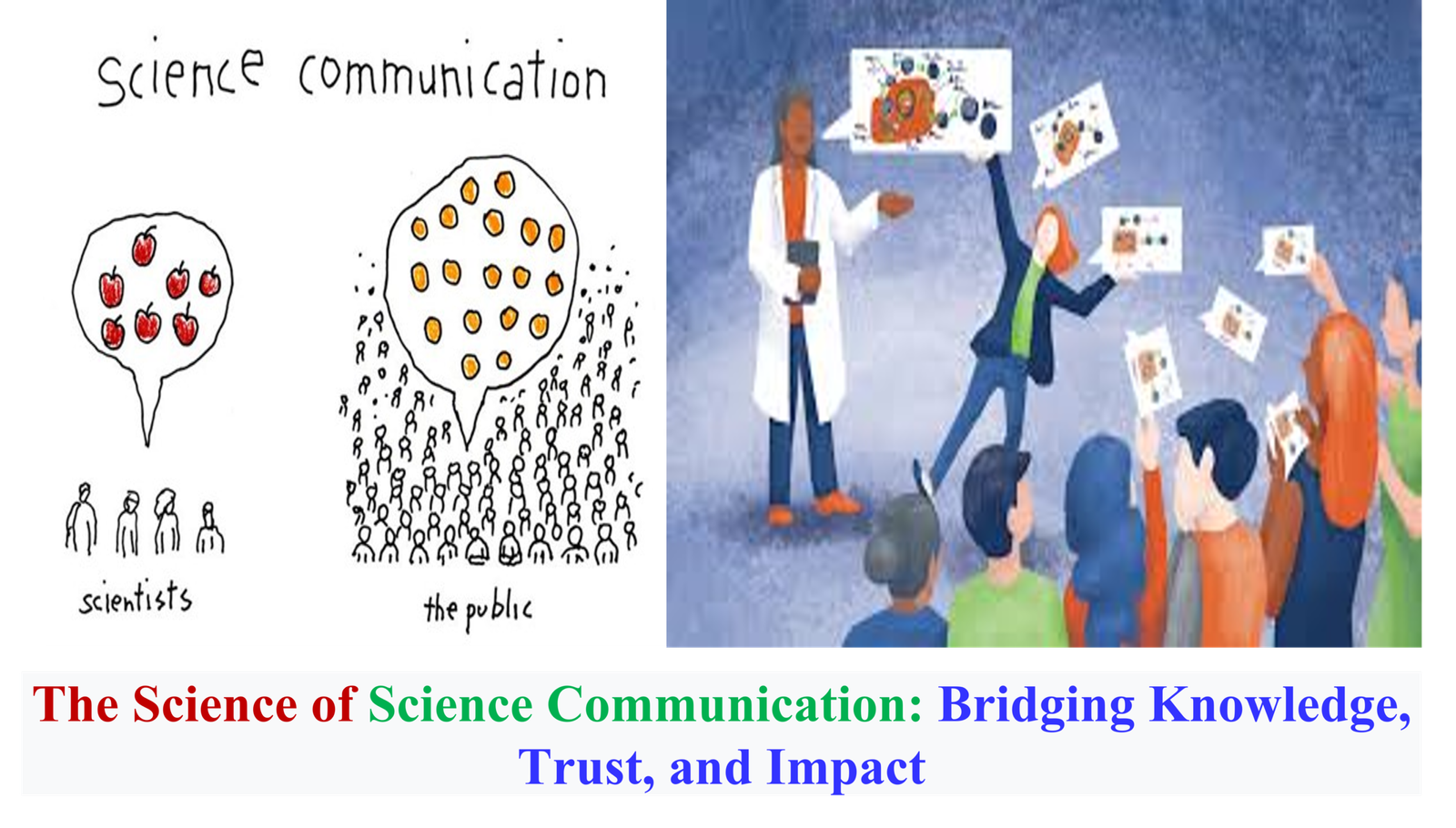
• Scientists may assume that the public “cannot understand science,” overlooking gaps in accessibility and education.
• The public may perceive scientists as distant or unempathetic, not recognizing the challenges of simplifying complex research.
This disconnects leads to mutual frustration and erosion of trust—a risk we cannot afford in critical domains like health, climate change, and technology.
What Does Success Look Like?
Successful science communication does not mean everyone agrees on decisions. Instead, it means:
✔ People understand the scientific facts relevant to their choices
✔ They can interpret evidence in meaningful ways
✔ They trust the source of information
Differences in decisions may still exist—because people value different things. That’s natural.
However, when facts become secondary to polarization or ideology, the failure is no longer just communicative—it becomes social and systemic.
The Way Forward: Integrating Science and Society
To truly strengthen science communication, we must integrate insights from:
• Social sciences
• Behavioral sciences
• Decision sciences
• Communication theory
Coupled with strong domain expertise, this integrated approach helps:
• Improve clarity and relevance
• Enhance audience engagement
• Build long-term trust
• Avoid costly miscommunication
A Call to Action
As scientists, educators, policymakers, and communicators, we must move beyond the assumption that “data speaks for itself.”
Data needs a voice. Science needs a narrative. Society needs understanding.
When science communication succeeds:
• Society benefits from informed decisions
• Public trust in science strengthens
• Investments in research yield real-world impact
• And importantly, science retains its most beautiful element—a sense of wonder
Final Thought
Science is not just about discovering truth—it is about sharing it responsibly, clearly, and compassionately. Because the true value of science is realized only when it reaches people—and makes a difference.